
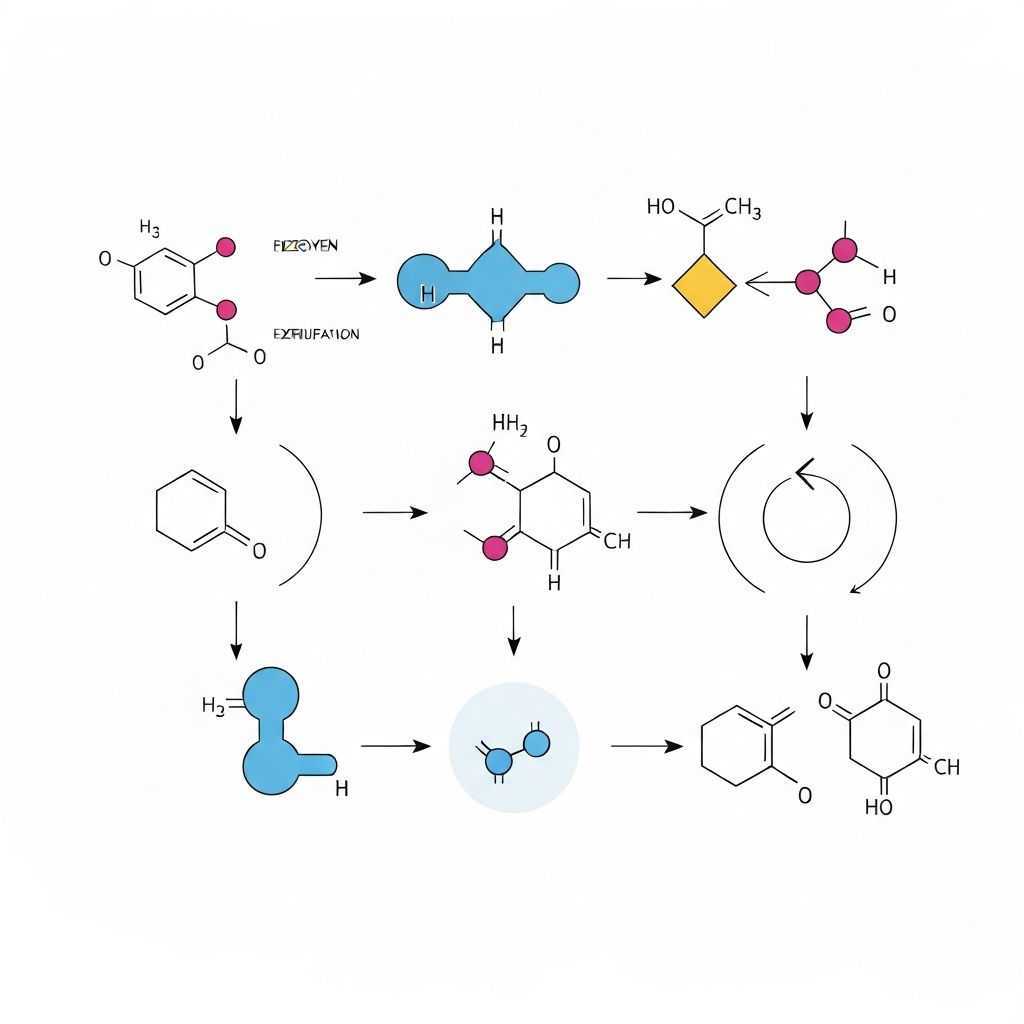
Normal Liver and Kidney Detoxification Pathways
Understanding Phase I and Phase II enzymatic processes, baseline metabolic capacity, and individual variation in hepatic and renal function.
Phase I: Modification and Oxidation
Phase I detoxification involves a family of enzymes called the cytochrome P450 system, located primarily in the liver but present in other tissues. These enzymes catalyse three main types of reactions:
- Oxidation—removing or adding oxygen atoms to molecules
- Reduction—adding hydrogen atoms
- Hydrolysis—breaking bonds by adding water
The goal of Phase I is to transform compounds into forms that can be further processed. These modified compounds are not necessarily less toxic than originals; some intermediates may actually be more reactive before conjugation in Phase II. Phase I enzyme activity is continuous, operating at a baseline rate determined by genetic factors (polymorphisms in CYP2D6, CYP2C9, CYP3A4, etc.), nutritional status (B vitamins, minerals), and current physiological load (existing medications, illness, stress).
Genetic Variation in Phase I Activity
Individuals express different variants of cytochrome P450 enzymes due to genetic polymorphisms. Some people are "poor metabolisers" with slower Phase I activity; others are "ultrarapid metabolisers" with accelerated activity. A third group are "extensive metabolisers" with normal activity. These genetic differences mean that identical dietary interventions produce different rates of compound processing in different individuals. No detox protocol can override genetic enzyme expression.
Phase II: Conjugation and Water Solubility
Phase II involves conjugation—attaching water-soluble molecules to compounds (whether Phase I-modified or direct substrates). This process involves several enzyme families:
- Glucuronidation—adding glucuronic acid (conjugation via UDP-glucuronosyltransferase, UGT)
- Sulphation—adding sulphate groups (via sulfotransferases, SULT)
- Glutathione conjugation—adding glutathione (via glutathione-S-transferases, GST)
- Methylation—adding methyl groups (via catechol-O-methyltransferase, COMT, and others)
- Acetylation—adding acetyl groups (via N-acetyltransferases, NAT)
Conjugation creates compounds that are readily excreted via urine or bile. The rate of Phase II conjugation is also genetically determined and influenced by nutritional factors (availability of sulphate, glycine, glutathione precursors). Like Phase I, Phase II operates continuously at baseline capacity. Short-term dietary changes do not substantially upregulate these enzyme systems in healthy individuals.
Genetic Polymorphisms in Phase II Enzymes
Variants in genes encoding GST, NAT, and COMT result in "fast" and "slow" acetylators and different rates of glutathione conjugation. These genetic differences contribute to individual variation in response to dietary components and environmental exposures. Again, no dietary protocol can fundamentally change enzyme expression in the short term.
Role of the Kidney in Excretion
The kidneys receive Phase II-conjugated compounds via the bloodstream and filter them into the urine. The kidney has its own metabolic capacity, including Phase I and Phase II enzyme expression, though less than the liver. Kidney function is optimised by adequate hydration, electrolyte balance, and absence of nephrotoxic exposures. Extreme dehydration impairs kidney function; conversely, excessive water intake above physiological need does not enhance excretion of established Phase II-conjugated compounds beyond normal rates.
Baseline Metabolic Capacity
In healthy individuals, Phase I and Phase II systems operate at a consistent, genetically determined baseline. The body continuously processes endogenous compounds (hormones, neurotransmitters, bile acids) and exogenous substances (dietary components, medications, environmental toxins) at rates determined by enzyme expression and substrate concentration. This baseline capacity is optimised through balanced nutrition (adequate micronutrients, antioxidant-rich foods), regular activity, adequate sleep, and stress management.
Detox Diets Do Not Upregulate Enzyme Activity
There is no evidence that short-term detox protocols (juice fasts, herbal supplements, restrictive eating patterns) substantially increase Phase I or Phase II enzyme expression or activity. Sustained nutritional deficiency (as occurs during severe restriction) may actually impair detoxification capacity by depleting cofactors required for optimal enzyme function. The notion that the body has dormant detoxification pathways awaiting "activation" via detox protocols is not supported by enzyme biochemistry or research evidence.
Individual Factors Influencing Detoxification Capacity
- Genetics—CYP450 polymorphisms, GST variants, NAT status, COMT variants
- Age—enzyme expression changes across the lifespan
- Sex—some sex hormones influence enzyme expression
- Medications—many drugs induce or inhibit P450 enzymes, altering the metabolism of other compounds
- Nutritional status—deficiency in B vitamins, minerals, or antioxidants may reduce detoxification efficiency
- Alcohol consumption—chronic use induces CYP2E1 and may alter overall detoxification
- Environmental exposures—repeated exposures to specific compounds may induce relevant enzyme systems
- Health conditions—liver disease, kidney disease, or metabolic disorders impair detoxification
These factors operate independently of any detox protocol. Addressing modifiable risk factors (balanced nutrition, reduced alcohol use, lower environmental toxin exposure, adequate sleep) supports baseline detoxification function far more effectively than restrictive detox interventions.
Limitations and Context
This content is educational and informational. It does not constitute medical or nutritional guidance. Individual liver and kidney function should be assessed by qualified healthcare professionals, particularly if there is a history of liver or kidney disease, medication use, or other health concerns. This information is presented to explain normal physiological detoxification, not to recommend or discourage any dietary intervention.
Explore Related Articles
Learn more about how the body processes compounds and maintains physiological balance.
View all articles